


The Garment That Doesn't Get Discarded: How Circularity Became My Design Philosophy

In November 2025, I presented my Cápsula Resort collection at Dreams Sapphire Resort in

Cancún.
It was a show that many described as an elegant reinvention. What few people knew is that the "reinvention" was exactly that: pieces from previous collections, reconstructed, recombined, and relaunched in a completely different context.
I didn't do it out of a lack of ideas. I did it because I believe it is an honest way to make fashion today.
Circularity is not recycling. It is intention from the very beginning.
There is an enormous difference between a garment that gets recycled because it had no other way out, and one that was designed from the start to be reinvented. I work from the second logic.
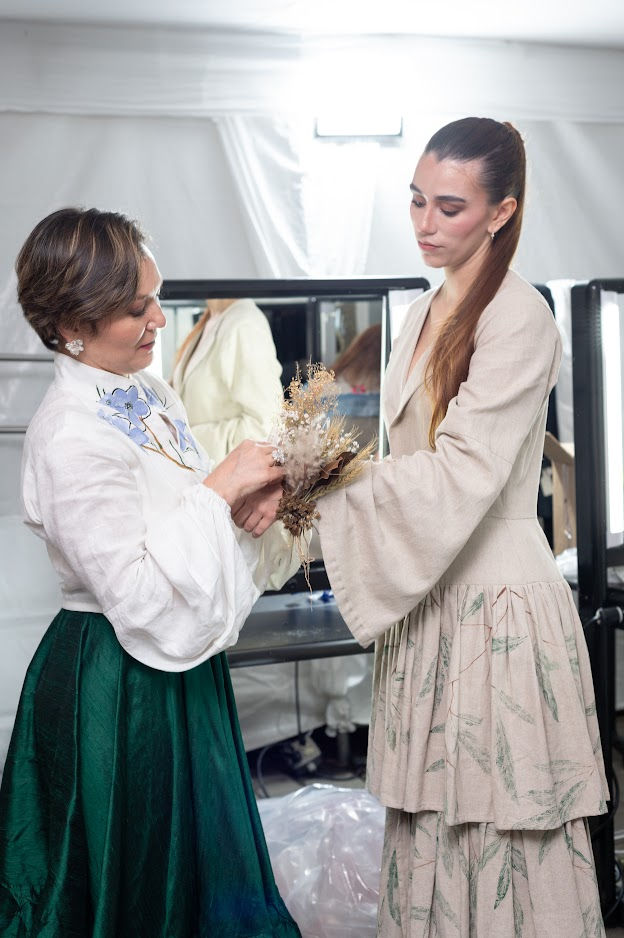
When I create a piece in organic linen with hand-painting, I think about how that fabric will age, how those brushstrokes will tell a different story in different contexts.
A piece from "Sensorial" — my Moscow Fashion Week 2024 collection — can speak of Nordic coldness in a European setting and of tropical warmth in a Caribbean resort. The garment doesn't change. What changes is the conversation it has with the world.
The circular economy is establishing itself as one of the central pillars of sustainable fashion, with brands implementing repair services and fostering a use-rather-than-replace mindset. But in artisanal luxury, the approach goes further: it is not about repairing what broke. It is about designing so that relevance never breaks.
What Cancún confirmed for me.
Seeing those pieces in a resort setting — with different light, different women, a different rhythm — confirmed something I had already sensed: true luxury does not depend on context to be relevant. It creates it.
That is what I seek with every Eve Valverde Atelier collection. Not seasonal garments. Objects with a long life.
Today's consumers prioritize versatile, quality pieces that transcend seasons, reducing the volume of their wardrobes while increasing their value and versatility. My client knows this. And I design for her.
The luxury that endures is not the most expensive. It is the most intelligent.
We live in an industry that normalizes disposal. That calls "collection" something that lasts a single season. That measures success by the speed of production.
I measure mine differently: by how many times a piece of mine can be reinvented without losing its essence.
That, for me, is enduring luxury.


Comments